Ties that Bind: Selections from the Collection
John Fawcett wrote a hymn on the theme in 1800.

John Fawcett wrote a hymn on the theme in 1800.
Fun, light-hearted, and beautiful.
Beginning with the sisters Claribel and Etta Cone’s 1950 donation of art, the Cone family has provided crucial support over many years to the Weatherspoon Art Museum, the most important example being the lead gift from Anne and Benjamin Cone, Sr. to construct our current building.
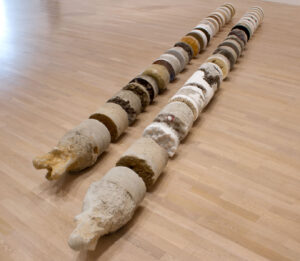
Humankind has a rich history of trying to understand natural environments through frameworks like time, topography, geology, and documentation. This exhibition brings together artworks from the museum’s permanent collection that explore ideas about erosion, entropy, encroachment, and impermanence as well as nature’s beauty and magnitude. Emil Lukas’s sculpture Time Line under Pear Tree, 1994-96, serves as the exhibition’s focal point among documentary, abstract, conceptual, and surrealist artworks.
Time, Space, Place, Trace is a collaborative effort between the Weatherspoon Art Museum, UNCG’s School of Art, and students in art education classes during the academic year 2019-2020. Working with Curator of Collections Elaine D. Gustafson and Associate Professor of Art Sunny Spillane, students were tasked to originate, research, and collaborate on an exhibition drawn from the museum’s collection. Upon determining the curatorial thesis, the students then selected, previewed, and evaluated artworks that illustrated and strengthened their concept. This semester, students will use the exhibition as a springboard to create curriculum-based lesson plans for Guilford County teachers. This is the second time that the Weatherspoon and the School of Art have collaborated on an exhibition to provide art education students a hands-on professional museum experience.
Organized by Elaine D. Gustafson, Curator of Collections.
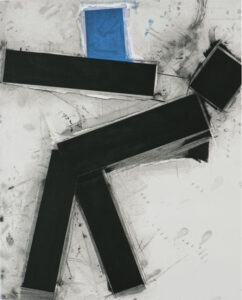
In one fell swoop the Weatherspoon acquired 45 significant artworks by both regionally and nationally recognized artists this past summer.
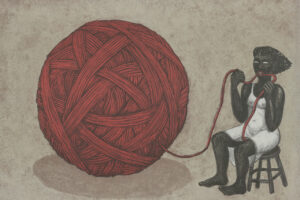
Alison Saar is known not only for her powerful sculptures—she is also a master of the art of printmaking.
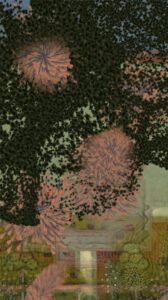
Shahzia Sikander takes classical Indo-Persian miniature painting—a traditional genre that is both highly stylized and disciplined—as the point of departure for her work, but challenges its strict formal tropes by experimenting with scale, layering, and various forms of new media.
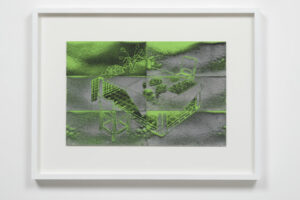
Over four decades of her practice, Mary Kelly has addressed issues relating to the body, systems of classification and power, and memory.
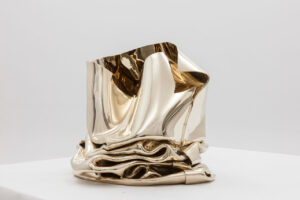
Treading a line between order and chaos, planned uniformity and unplanned disarray, Alyson Shotz employs natural phenomena—such as mass, force, gravity, and light—to create her artworks.

The textile industry put Greensboro on the map.

The Weatherspoon is pleased to present the 2019 biennial exhibition of recent work by studio art faculty in UNCG’s School of Art.
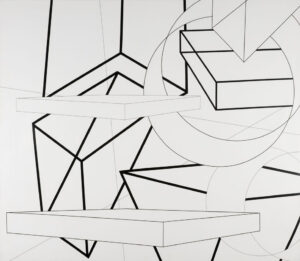
Carefully defined expanses of color and precisely calculated lines—the characteristic elements of geometric abstractions are often defined as rational, measured,